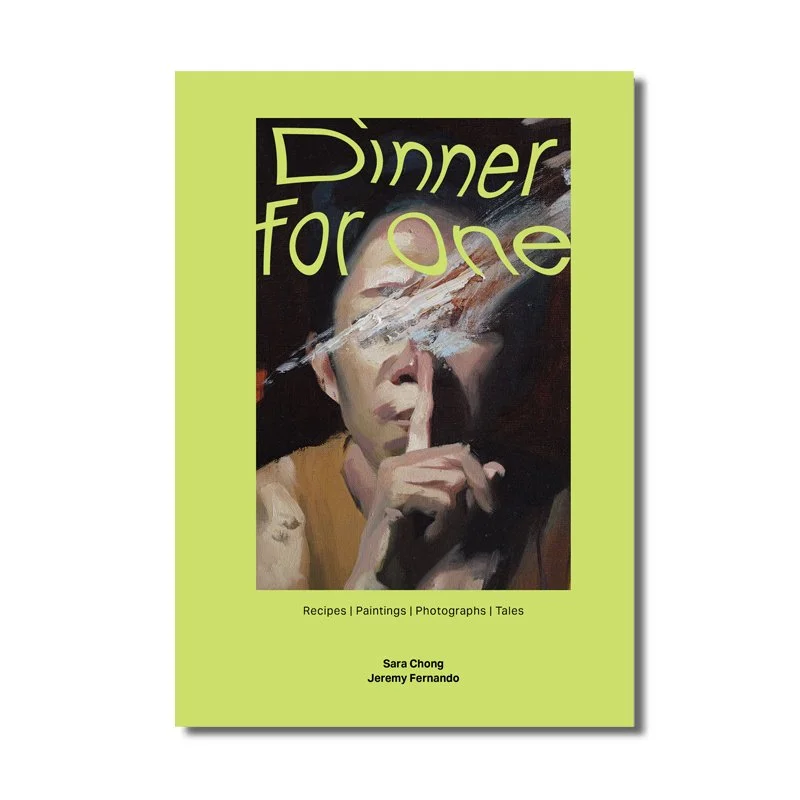
dinner for one
Contributors
Description
Dinner for One is the place where (oh go on, call it ‘the table at which’; you know you want to) recipes, paintings, photographs, tales, ingredients, kitchen encounters (confidential or otherwise … vale, Tony), meals, memories of culinary experiences, recountings of memorable noms (remembrances of lost thyme), gather.
Not so much as a mélange: there is no mixing here (we’re not making a fecking salad). But where our tales, photographs, paintings, recipes, are in-conversation with each other. And where each time we eat, we are eating not just in but as communion; a coming-together (right now … ) that transcends the profane (over me … )
Come dine with us! (om nom nom nom)
Reviews
Chong and Fernando's art is nectar that we drink to "slip into our own skin" and "dilute and concentrate in response to the world around us." 𝐷𝑖𝑛𝑛𝑒𝑟 𝑓𝑜𝑟 𝑂𝑛𝑒 is a living artifact, a place where “your reflection, what you take in, consume, takes you over, consumes you, becomes you.” I felt the weight of the words and images on my tongue, listened to the sound of my own chewing like "another sound from [my] youth, a sound from another childhood," and then swallowed it all down.
Back cover blurbs
The simplest way I can understand the practical meaning of intelligence is through one’s capacity — or lack thereof, to be frank — to highlight the potential links that exist between all visible and invisible things. In some strange way, it feels that art ... needle-moving art, the kind that actually brushes against your life ... is intelligence put at the service of beauty.
Well, reader, this book here, cloaked as it may be in its own colloquial casual/isms, is, as far as I can tell, a damn intelligent work of art. One that recognises, at times almost paradoxically, that beauty and meaning aren’t found only in objects, but also in the glue and arrangement that binds them together.
As a chef, I must say it often felt like witnessing cooking happen in real time: recipes muddled, photographed mid-process — real cooking of thought, symbol, and meaning, into a proper stew that sees no difference between eating and learning, nourishment and knowledge.
~ Ivan Brehm, writer, artist, and Chef-Owner of Nouri and Appetite
As a chef, I read Dinner for One the way I create a dish — slowly, curiously, never quite sure where it might lead. Jeremy and Sara don’t chase perfection; they let things burn a little, taste again, and keep going. Like a late-night meal cooked just for yourself, it reminds you that food is still about care, not show.
~ Liaw Wei Loon, Chef-patron of Jungle
Rollicking good fun!
~ Lim Lee Ching, writer, poet, professor
A meal so lovingly prepared you wish and wonder if its words, too, are edible. If ‘abandonment is a form of freedom’ then time is at once precise and indefinite — like the memory of sherry buzzing on your tongue. And if food is love, and love is food, simple ingredients just won’t do — you need the magic of Jeremy Fernando’s language and Sara Chong’s paintings alongside a slab of butter and a goblet of gin. This body of work tastes like a stiff Irish coffee on a cold Sunday morning — goes down easy, and you don’t know you need it until you’re knocked out.
~ Brinda Gulati, writer, editor, artist
Decoupling the seemingly instructive and precise nature of cookbook writing, Dinner for One infuses philosophical musings, splashes of literary prose, snarky wittiness, and conscious visual illustrations. Jeremy and Sara’s multidisciplinary approach proffers a new way of (re)imagining the idea of cooking, be it for one, or even more.
~ Nadene Lim, chef, thinker, optimist
Excellent — sound above sense every time!
~ Neil Murphy, writer, literary critic, professor
A Blurp (what you need)
Hunger 60g
Love 100g
Literature 30g
Wit a splash
Intellect 2 tablespoons
Eye for detail 40g
Humor sprinkle as much as you like
~ Kwok Yijun, full-time pastry chef, part-time reader
I love the gesture in which recipes, which are, in a sense, already written in verse become playful poems; and poems, in turn, become recipes for sparkling encounters with tasting and eating, with reading and thinking. And, can I just say: I fell in love with your totalitarian broccoli head on the spot! It is hard to keep the coffee in the mug or the broccoli on the plate when such hilarious figures show up for dinner! And Sara Chong’s paintings — with their empathic brushstrokes and her painterly wisdom — serve as a most-illuminating reminder of what paintings can do that no other media can. How well her palpable, “fleshy” brushstrokes fit together with the flesh of the text! What a great accomplishment to have opened up a space — for thinking, for reading, for tasting — in which desserts and matters of truth, soups and questions of love, start communicating — and have so many beautiful things to say to one another. It is absolutely strange, and it is absolutely delightful, and it makes for a most wonderful adventure.
~ Anders Kølle, writer, art historian, philosopher, professor